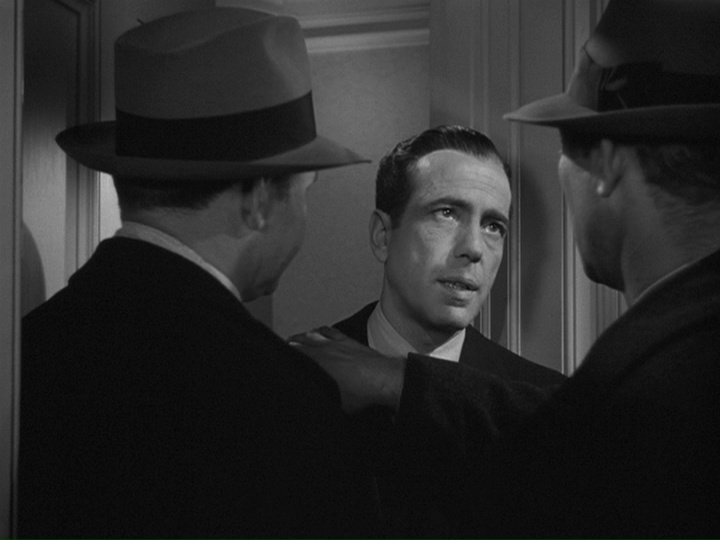
Something happened to me this summer after I saw The Bourne Legacy: a fascination with Jeremy Renner took hold and wouldn't let go. I had seen him in other movies (most notably The Hurt Locker) and was intrigued by his intense energy and expressiveness, but something about his starring role in this film pushed the rest of the buttons needed to fully engage my obsessionator. Not sure of all the factors, but I think the most important one was my realization that he could be funny. There is a moment early on when he exclaims in disbelief that the doctor who has been working with him for years doesn't know his name and calls him "the number 5". Something about his body language and vocal intonation in this scene conveyed a humorous level of exasperation in the midst of all the spy thriller seriousness. Not so much as to undercut the proceedings, but enough to expand the frame and loosen things up in a healthy way.Anyway, I realized I wanted to see more, so after consulting IMDB and some knowledgeable sources (thanks, Ide Cyan!), I put a whole pile of Renner's earlier movies in my queue. Though he's come into the general consciousness only recently, he's been making movies for over 15 years, so there were quite a few to choose from. It took me a couple months to get through them (the ones I wanted to watch, that is; I have no desire to see "National Lampoon's Senior Trip"), and a very interesting couple of months it was.
S.W.A.T.
2003. Rated PG-13. Director: Clark Johnson. Renner plays Brian Gamble, the former partner of Colin Farrell's character

A motley crew of Los Angeles police officers have to make their way through a gauntlet of mercenaries while transporting a dangerous criminal to prison. You can guess what sort of movie this will be from the following facts: their leader is played by Samuel L. Jackson, the team includes a cop played by LL Cool J, and the nefarious criminal is a Frenchman. I'm sorry to say that it is not bad enough to be good. There are various poorly-executed plot elements, but the closest thing to a theme is the good cop/bad cop contrast between Colin Farrell's character and his ex-partner, played by Renner. I guess we're supposed to root for Farrell, but he is so goddamn boring that it is impossible. An attempt to give him some depth with an early breakup scene completely fails because a) he is obviously the one who's lost interest in the relationship, not the girlfriend and b) we never find out why. Some later hints of romance with Michelle Rodriguez's character are also abandoned before anything interesting happens.
Renner is way more entertaining to watch, but his character makes no sense unless you believe that hot-heads who occasionally bend the rules are automatically evil and on their way to perdition. Perhaps my problem with the progression of events is due to all the morally gray protagonists I've seen in movies and on TV in the past few years; S.W.A.T. may reflect the absolutism of an earlier time that just reads as unbelievable now. *shrug* In any case, his badness in the later parts of the movie is over the top and kind of amusing, but it all ends with a bit of whimper.
There are a couple of interesting comments on racial issues in the movie, my favorite being Octavia Spencer's by-stander telling Samuel L. Jackson's character that he ought to have better things to do than arrest other black men. And a couple actors from The Wire make welcome appearances. But alas, the most amusing thing about this film is the fact that there is a song on the soundtrack named "Samuel Jackson". Now that there is some metacommentary!
A Little Trip to Heaven
2005. Rated R. Director: Baltasar Kormįkur. Renner plays Fred/Kelvin, a small-time crook attempting life insurance fraud.

An insurance claims adjuster visits a small town in Minnesota to investigate a deadly car crash and becomes enmeshed in a criminal plot. It's revealed within minutes that Renner's character is a very bad man and Forest Whitaker's purpose in the movie is to get to the bottom of his scheme. So most of the running time is spent watching Whitaker's character bumbling around with inexplicably fogged glasses, questioning Renner's wife (played by Julia Stiles) and various other rustic folk in his efforts to uncover a lot of needlessly complicated and implausible backstory. And he does it in a bizarre high-pitched voice with an accent that veers between Scotland, Minnesota, New York, and Jamaica. As if that weren't enough, the landscape is subtly wrong for the setting; I kept wondering if this was supposed to be some kind of surrealistic psychodrama. But no... it was just filmed in Iceland! Of course! …?!
Renner plays a pretty generic bad guy in this movie and sports some unappealing facial hair for most of it. Even though I was highly amused by him exclaiming near the end, “Well, looks like I'm pretty fucked!” I must advise giving this one a pass unless you feel like lobbing MST3K-style commentary at the screen.
2003. Rated PG-13. Director: Clark Johnson. Renner plays Brian Gamble, the former partner of Colin Farrell's character

A motley crew of Los Angeles police officers have to make their way through a gauntlet of mercenaries while transporting a dangerous criminal to prison. You can guess what sort of movie this will be from the following facts: their leader is played by Samuel L. Jackson, the team includes a cop played by LL Cool J, and the nefarious criminal is a Frenchman. I'm sorry to say that it is not bad enough to be good. There are various poorly-executed plot elements, but the closest thing to a theme is the good cop/bad cop contrast between Colin Farrell's character and his ex-partner, played by Renner. I guess we're supposed to root for Farrell, but he is so goddamn boring that it is impossible. An attempt to give him some depth with an early breakup scene completely fails because a) he is obviously the one who's lost interest in the relationship, not the girlfriend and b) we never find out why. Some later hints of romance with Michelle Rodriguez's character are also abandoned before anything interesting happens.
Renner is way more entertaining to watch, but his character makes no sense unless you believe that hot-heads who occasionally bend the rules are automatically evil and on their way to perdition. Perhaps my problem with the progression of events is due to all the morally gray protagonists I've seen in movies and on TV in the past few years; S.W.A.T. may reflect the absolutism of an earlier time that just reads as unbelievable now. *shrug* In any case, his badness in the later parts of the movie is over the top and kind of amusing, but it all ends with a bit of whimper.
There are a couple of interesting comments on racial issues in the movie, my favorite being Octavia Spencer's by-stander telling Samuel L. Jackson's character that he ought to have better things to do than arrest other black men. And a couple actors from The Wire make welcome appearances. But alas, the most amusing thing about this film is the fact that there is a song on the soundtrack named "Samuel Jackson". Now that there is some metacommentary!
A Little Trip to Heaven
2005. Rated R. Director: Baltasar Kormįkur. Renner plays Fred/Kelvin, a small-time crook attempting life insurance fraud.

An insurance claims adjuster visits a small town in Minnesota to investigate a deadly car crash and becomes enmeshed in a criminal plot. It's revealed within minutes that Renner's character is a very bad man and Forest Whitaker's purpose in the movie is to get to the bottom of his scheme. So most of the running time is spent watching Whitaker's character bumbling around with inexplicably fogged glasses, questioning Renner's wife (played by Julia Stiles) and various other rustic folk in his efforts to uncover a lot of needlessly complicated and implausible backstory. And he does it in a bizarre high-pitched voice with an accent that veers between Scotland, Minnesota, New York, and Jamaica. As if that weren't enough, the landscape is subtly wrong for the setting; I kept wondering if this was supposed to be some kind of surrealistic psychodrama. But no... it was just filmed in Iceland! Of course! …?!
Renner plays a pretty generic bad guy in this movie and sports some unappealing facial hair for most of it. Even though I was highly amused by him exclaiming near the end, “Well, looks like I'm pretty fucked!” I must advise giving this one a pass unless you feel like lobbing MST3K-style commentary at the screen.
01/09/13: Jeremy Renner on Film: The Not So Good
North Country
2005. Rated R. Director: Niki Caro. Renner plays Bobby Sharp, supervisor of "the powder room"¯ at the iron mine.

A dramatization of the first class action lawsuit filed against a company for sexual discrimination in the workplace (Jenson vs. Eveleth Mines). Renner's character is introduced twenty minutes in, and his first line is, "So Harlan, which one of these girls is going to be my bitch?" Subtlety, thy name is not this movie.
To be fair, the conditions at the mine were egregious and warranted a pretty frank portrayal on film. And the acting by Charlize Theron, Frances McDormand, Sean Bean, and various others (including Renner, who brings some nuance to the role of a vile sexist jerk), is quite decent. This could have been a gripping story. But for some reason, the filmmakers were not satisfied and decided to throw in a traumatic past for the protagonist that had, at best, an implausible connection to the film's present-day events and served only to tip the story over into the maudlin. They also made a couple of really dodgy narrative choices in the process. A film on the topic of sexual discrimination should not have the main character's father sweep in and single-handedly change his sexist co-workers' opinions with one impassioned speech. And it should absolutely not take away her voice just as she is about to describe being raped as a teenager and replace it with a flashback scene of her being brutalized. Really... not good.
It's possible that I wouldn't be so bothered by all this if I hadn't read up on the real story afterward and discovered that a lot of the movie's details were invented to make it more conventionally structured and dramatic. For example: the real-life counterpart of the main character had to talk to not one, but 50 lawyers before one would take up her case; she was not alone in filing suit (the movie makes much of her being the lone troublemaker among a crowd of women afraid to rock the boat); and the lawsuit actually took a full 14 years to come to a conclusion! Imagine the courage and pure cussed persistence it took to keep going over all that time and create a legal precedent for all American women to combat discrimination in the workplace. I would really like to see a well-made movie about the people who did it. Too bad this wasn't it.
28 Weeks Later
2007. Rated R. Director: Juan Carlos Fresnadillo. Renner plays Doyle, an American soldier

The sequel to Danny Boyle's "fast zombie"¯ classic, 28 Days Later. The infected have succumbed to starvation, leaving England full of corpses and silence. An American military base is established on London's Isle of Dogs, and the few survivors are cautiously gathered into protective custody. Robert Carlyle plays a man who's made it this far by less than honorable means; he is reunited with his two children at the military base, and some fraught discussion leads to the children heading off on a hunt for their mother that unsurprisingly ends in disaster. It is a zombie movie, after all.
"28 Weeks Later" advances the story of the rage virus apocalypse in some interesting ways, and I appreciated the mercilessly downbeat ending after the first film's oddly happy denouement. Renner also gets to play the most heroic character of his career, as one of the few members of the military to break ranks and help civilians escape from a deadly lockdown. However, it all seems like more of a vignette than a complete narrative. Characters get even less development than in the first movie, so it is difficult to care about their fates, and I couldn't help laughing at how one particular infected kept popping up over and over again, almost like a zombie version of the Terminator. Some might say that the whole genre is over the top enough to be ridiculous, but I really don't think the director was going for laugh out loud funny with this one. Oops.
Mission Impossible: Ghost Protocol
2011. Rated PG-13. Director: Brad Bird. Renner plays William Brandt, an IMF "analyst"

The fourth in a series of action movie spy capers starring Tom Cruise, this film is fluff from beginning to end. Early on, the Kremlin is bombed in a way that falsely implicates the United States, and the "Impossible Missions Force" is disavowed as a result. So the latest incarnation of the team (Cruise, Simon Pegg, Paula Patton, and Renner) have to go it alone in their attempt to save the world from nuclear armageddon. Plenty of fanciful technology is used to move the plot along, and set piece follows set piece to the inevitably triumphant conclusion.
There is some breezy charm here. I enjoyed Simon Pegg's performance as the unexpectedly promoted geek Benjy, and Renner has some humorous moments as Brandt is forced to take part in craziness for which he was not prepared. (The line "Next time I get to seduce the rich guy" was a gift to Renner slash fans everywhere.) But I'm afraid I was underwhelmed by Paula Patton and Cruise himself, and I found the overall plot so clichéd that I could not invest in it emotionally. It's not that I mind light-hearted romps; I just want them to be genuinely funny and/or charming. This film wasn't enough of either for me.
2005. Rated R. Director: Niki Caro. Renner plays Bobby Sharp, supervisor of "the powder room"¯ at the iron mine.

A dramatization of the first class action lawsuit filed against a company for sexual discrimination in the workplace (Jenson vs. Eveleth Mines). Renner's character is introduced twenty minutes in, and his first line is, "So Harlan, which one of these girls is going to be my bitch?" Subtlety, thy name is not this movie.
To be fair, the conditions at the mine were egregious and warranted a pretty frank portrayal on film. And the acting by Charlize Theron, Frances McDormand, Sean Bean, and various others (including Renner, who brings some nuance to the role of a vile sexist jerk), is quite decent. This could have been a gripping story. But for some reason, the filmmakers were not satisfied and decided to throw in a traumatic past for the protagonist that had, at best, an implausible connection to the film's present-day events and served only to tip the story over into the maudlin. They also made a couple of really dodgy narrative choices in the process. A film on the topic of sexual discrimination should not have the main character's father sweep in and single-handedly change his sexist co-workers' opinions with one impassioned speech. And it should absolutely not take away her voice just as she is about to describe being raped as a teenager and replace it with a flashback scene of her being brutalized. Really... not good.
It's possible that I wouldn't be so bothered by all this if I hadn't read up on the real story afterward and discovered that a lot of the movie's details were invented to make it more conventionally structured and dramatic. For example: the real-life counterpart of the main character had to talk to not one, but 50 lawyers before one would take up her case; she was not alone in filing suit (the movie makes much of her being the lone troublemaker among a crowd of women afraid to rock the boat); and the lawsuit actually took a full 14 years to come to a conclusion! Imagine the courage and pure cussed persistence it took to keep going over all that time and create a legal precedent for all American women to combat discrimination in the workplace. I would really like to see a well-made movie about the people who did it. Too bad this wasn't it.
28 Weeks Later
2007. Rated R. Director: Juan Carlos Fresnadillo. Renner plays Doyle, an American soldier

The sequel to Danny Boyle's "fast zombie"¯ classic, 28 Days Later. The infected have succumbed to starvation, leaving England full of corpses and silence. An American military base is established on London's Isle of Dogs, and the few survivors are cautiously gathered into protective custody. Robert Carlyle plays a man who's made it this far by less than honorable means; he is reunited with his two children at the military base, and some fraught discussion leads to the children heading off on a hunt for their mother that unsurprisingly ends in disaster. It is a zombie movie, after all.
"28 Weeks Later" advances the story of the rage virus apocalypse in some interesting ways, and I appreciated the mercilessly downbeat ending after the first film's oddly happy denouement. Renner also gets to play the most heroic character of his career, as one of the few members of the military to break ranks and help civilians escape from a deadly lockdown. However, it all seems like more of a vignette than a complete narrative. Characters get even less development than in the first movie, so it is difficult to care about their fates, and I couldn't help laughing at how one particular infected kept popping up over and over again, almost like a zombie version of the Terminator. Some might say that the whole genre is over the top enough to be ridiculous, but I really don't think the director was going for laugh out loud funny with this one. Oops.
Mission Impossible: Ghost Protocol
2011. Rated PG-13. Director: Brad Bird. Renner plays William Brandt, an IMF "analyst"

The fourth in a series of action movie spy capers starring Tom Cruise, this film is fluff from beginning to end. Early on, the Kremlin is bombed in a way that falsely implicates the United States, and the "Impossible Missions Force" is disavowed as a result. So the latest incarnation of the team (Cruise, Simon Pegg, Paula Patton, and Renner) have to go it alone in their attempt to save the world from nuclear armageddon. Plenty of fanciful technology is used to move the plot along, and set piece follows set piece to the inevitably triumphant conclusion.
There is some breezy charm here. I enjoyed Simon Pegg's performance as the unexpectedly promoted geek Benjy, and Renner has some humorous moments as Brandt is forced to take part in craziness for which he was not prepared. (The line "Next time I get to seduce the rich guy" was a gift to Renner slash fans everywhere.) But I'm afraid I was underwhelmed by Paula Patton and Cruise himself, and I found the overall plot so clichéd that I could not invest in it emotionally. It's not that I mind light-hearted romps; I just want them to be genuinely funny and/or charming. This film wasn't enough of either for me.
Neo Ned
2005. Not Rated. Director: Van Fischer. Renner plays Ned, a neo-Nazi criminal who has been committed to a mental institution

The concept is eyebrow-raising: a white supremacist falls in love with a black woman who claims she's the reincarnation of Adolph Hitler. How can they pull this off without offending the majority of the audience and/or trivializing the subject matter? The answer is... they can't, really. The good news is that the movie is played as a relatively harmless screwball romance rather than a social statement; even if it is in bad taste (I found myself cringing whenever Ned went out in public in his swastika T-shirt -- and he spends half the movie wearing it), it has its moments. Gabrielle Union is engagingly wry and vulnerable and has great chemistry with Renner, whose character is unlike any other I've seen him play. Ned is spastic, easily distracted, overflowing with energy and poorly controlled urges, but surprisingly gentle at heart. (From what I have seen, Ned is the character most like Renner in real life.) It's soon clear that his association with neo-Nazis is a case of an impressionable kid with a bad home life falling in with the wrong crowd, and once he gets to know Rachael (or, as he continues to call her, Adolph), his prejudices easily fall away. Narratively, this probably lets him (and society in general) off the hook too easily, but I can't muster much indignation that Renner avoided another evil sociopath role. And as a major plus, this movie features his hottest sex scene ever. And when I say hot, I mean smoking!
The Assassination of Jesse James by the Coward Robert Ford
2007. Rated R. Director: Andrew Dominik. Renner plays Wood Hite, cousin of Jesse James and an occasional member of his gang.

A period piece set in the American midwest of the 1880s, the film chronicles the collapse of a criminal gang from the inside as various associates of the famous outlaw Jesse James turn against each other.
There's some beautiful cinematography and poetic Deadwood-like language, and Casey Affleck is weirdly fascinating in his portrayal of Robert Ford, a pathetic hero worshipper whose obsession turns bitter once he gets to know the real Jesse James. Yet there is a stilted quality to the film. It tries to fit in a lot of characters and events that don't always seem connected to one another. (A particular oddity is the repeated mention of someone named Jim Cummins, who never appears in the film as far as I could tell.) A voiceover helps us to understand what's happening, but it adds to the sense of narrative distance. Also, it's weird how women seem to be entirely unimportant to the filmmakers. Perhaps they are making a point about how these criminal gangs thought of the world? Ummm... actually, I think they just don't care.
Renner's role as Wood Hite is fairly minor, though he does get a chance to sing at a campfire before a train robbery and later takes part in the most puzzlingly inaccurate gun fight I've ever seen on film. An odd highlight of the film is an appearance by Nick Cave in a bar near the end, entertaining the patrons with a song about what a coward Robert Ford is. I was surprised in the moment, but in retrospect, I have to say this is exactly the kind of movie you should expect to find Nick Cave in.
The Unusuals
2009. Unrated. Renner plays Detective Jason Walsh, a police officer in New York City's 2nd Precinct

"The Unusuals" was a late-season introduction on ABC in 2009 that lasted for 10 episodes before being canceled. A blend of buddy comedy, eccentric workplace slice o' life, and crime thriller, it didn't really cohere that well, but some elements of it were very well done. I really loved Adam Goldberg as the cranky detective Eric Delahoy, who's in a state of denial after learning he has a brain tumor and starts acting out strangely. The interplay between him and his neurotic partner (played by Harold Perrineau) is hilarious. Amber Tamblyn is also appealing in her portrayal of a privileged rich girl who is trying to hide her past from her blue-collar fellow detectives so they will take her seriously as a policewoman. On the other hand, an early storyline about another detective's criminal past and the lowlife associate who won't let it go is gratingly horrible. It's over with by episode five, but alas, that isn't soon enough.
Renner's character is middle-of-the-road: appealing, but not developed very well. He owns a hole-in-the-wall restaurant that is open only when he isn't working and feels like cooking, and his menu consists of ghastly improvised items like pork chops drenched in “a Skittles reduction"¯ because he ran out of fruit. (People regularly grimace in disgust after tasting his fare.) This, along with his practical jokes in the workplace, lead me to believe that Walsh was conceived as an amusing and eccentric loner we are supposed to find fascinating. I'm sorry to say that it doesn't work. Maybe it's the writing (some early mystery about his character is squandered within a few episodes), maybe it's Renner's performance, but rather than being gripping he's just kind of solid. There are some nice sexy scenes between him and his secret workplace girlfriend, though.
The Town
2010. Rated R. Director: Ben Affleck. Renner plays Jem Coughlin, bank robber and best friend of Ben Affleck's main character.

Bank robbers in Charlestown are pursued by the FBI in a game of cat and mouse. This movie is somewhat reminiscent of S.W.A.T. in its character dynamics. Renner plays a brutal and unpredictable hothead who is contrasted with a morally upstanding partner, in this case played by Affleck. And once again, the “good guy” turns out to be a bit of a snooze. Affleck is definitely hunky with his understated humor and tattoos, but his energy level is so low that I found it hard to become invested in his fate. His romantic interest (played by Rebecca Hall) has a bit of quirky charm that lightens the material somewhat; you can understand what he sees in her. But his criminal associates don't want to let him go, least of all to shack up with a potential witness against them. Renner plays his best friend Coughlin as a live wire quivering with hostile energy, both electric and deadly. He has none of his friend's qualms about violence; for him, it's a feature, not a bug, and after spending nine years in prison, he's ready to blow off some steam. Though this is one of Renner's more unpleasant roles, his screen presence is undeniable. (It resulted in his second Oscar nomination.) Add in Pete Postlethwaite's flinty crime boss and Jon Hamm's bloodhound of an FBI agent, and the results were guaranteed to involve plenty of gunfire. However, I was left with a sense that it all should have been more meaningful, or at least more thrilling.
2005. Not Rated. Director: Van Fischer. Renner plays Ned, a neo-Nazi criminal who has been committed to a mental institution

The concept is eyebrow-raising: a white supremacist falls in love with a black woman who claims she's the reincarnation of Adolph Hitler. How can they pull this off without offending the majority of the audience and/or trivializing the subject matter? The answer is... they can't, really. The good news is that the movie is played as a relatively harmless screwball romance rather than a social statement; even if it is in bad taste (I found myself cringing whenever Ned went out in public in his swastika T-shirt -- and he spends half the movie wearing it), it has its moments. Gabrielle Union is engagingly wry and vulnerable and has great chemistry with Renner, whose character is unlike any other I've seen him play. Ned is spastic, easily distracted, overflowing with energy and poorly controlled urges, but surprisingly gentle at heart. (From what I have seen, Ned is the character most like Renner in real life.) It's soon clear that his association with neo-Nazis is a case of an impressionable kid with a bad home life falling in with the wrong crowd, and once he gets to know Rachael (or, as he continues to call her, Adolph), his prejudices easily fall away. Narratively, this probably lets him (and society in general) off the hook too easily, but I can't muster much indignation that Renner avoided another evil sociopath role. And as a major plus, this movie features his hottest sex scene ever. And when I say hot, I mean smoking!
The Assassination of Jesse James by the Coward Robert Ford
2007. Rated R. Director: Andrew Dominik. Renner plays Wood Hite, cousin of Jesse James and an occasional member of his gang.

A period piece set in the American midwest of the 1880s, the film chronicles the collapse of a criminal gang from the inside as various associates of the famous outlaw Jesse James turn against each other.
There's some beautiful cinematography and poetic Deadwood-like language, and Casey Affleck is weirdly fascinating in his portrayal of Robert Ford, a pathetic hero worshipper whose obsession turns bitter once he gets to know the real Jesse James. Yet there is a stilted quality to the film. It tries to fit in a lot of characters and events that don't always seem connected to one another. (A particular oddity is the repeated mention of someone named Jim Cummins, who never appears in the film as far as I could tell.) A voiceover helps us to understand what's happening, but it adds to the sense of narrative distance. Also, it's weird how women seem to be entirely unimportant to the filmmakers. Perhaps they are making a point about how these criminal gangs thought of the world? Ummm... actually, I think they just don't care.
Renner's role as Wood Hite is fairly minor, though he does get a chance to sing at a campfire before a train robbery and later takes part in the most puzzlingly inaccurate gun fight I've ever seen on film. An odd highlight of the film is an appearance by Nick Cave in a bar near the end, entertaining the patrons with a song about what a coward Robert Ford is. I was surprised in the moment, but in retrospect, I have to say this is exactly the kind of movie you should expect to find Nick Cave in.
The Unusuals
2009. Unrated. Renner plays Detective Jason Walsh, a police officer in New York City's 2nd Precinct

"The Unusuals" was a late-season introduction on ABC in 2009 that lasted for 10 episodes before being canceled. A blend of buddy comedy, eccentric workplace slice o' life, and crime thriller, it didn't really cohere that well, but some elements of it were very well done. I really loved Adam Goldberg as the cranky detective Eric Delahoy, who's in a state of denial after learning he has a brain tumor and starts acting out strangely. The interplay between him and his neurotic partner (played by Harold Perrineau) is hilarious. Amber Tamblyn is also appealing in her portrayal of a privileged rich girl who is trying to hide her past from her blue-collar fellow detectives so they will take her seriously as a policewoman. On the other hand, an early storyline about another detective's criminal past and the lowlife associate who won't let it go is gratingly horrible. It's over with by episode five, but alas, that isn't soon enough.
Renner's character is middle-of-the-road: appealing, but not developed very well. He owns a hole-in-the-wall restaurant that is open only when he isn't working and feels like cooking, and his menu consists of ghastly improvised items like pork chops drenched in “a Skittles reduction"¯ because he ran out of fruit. (People regularly grimace in disgust after tasting his fare.) This, along with his practical jokes in the workplace, lead me to believe that Walsh was conceived as an amusing and eccentric loner we are supposed to find fascinating. I'm sorry to say that it doesn't work. Maybe it's the writing (some early mystery about his character is squandered within a few episodes), maybe it's Renner's performance, but rather than being gripping he's just kind of solid. There are some nice sexy scenes between him and his secret workplace girlfriend, though.
The Town
2010. Rated R. Director: Ben Affleck. Renner plays Jem Coughlin, bank robber and best friend of Ben Affleck's main character.

Bank robbers in Charlestown are pursued by the FBI in a game of cat and mouse. This movie is somewhat reminiscent of S.W.A.T. in its character dynamics. Renner plays a brutal and unpredictable hothead who is contrasted with a morally upstanding partner, in this case played by Affleck. And once again, the “good guy” turns out to be a bit of a snooze. Affleck is definitely hunky with his understated humor and tattoos, but his energy level is so low that I found it hard to become invested in his fate. His romantic interest (played by Rebecca Hall) has a bit of quirky charm that lightens the material somewhat; you can understand what he sees in her. But his criminal associates don't want to let him go, least of all to shack up with a potential witness against them. Renner plays his best friend Coughlin as a live wire quivering with hostile energy, both electric and deadly. He has none of his friend's qualms about violence; for him, it's a feature, not a bug, and after spending nine years in prison, he's ready to blow off some steam. Though this is one of Renner's more unpleasant roles, his screen presence is undeniable. (It resulted in his second Oscar nomination.) Add in Pete Postlethwaite's flinty crime boss and Jon Hamm's bloodhound of an FBI agent, and the results were guaranteed to involve plenty of gunfire. However, I was left with a sense that it all should have been more meaningful, or at least more thrilling.
01/09/13: Jeremy Renner on Film: The B List
12 and Holding
2005. Rated R. Director: Michael Cuesta. Renner plays Gus Maitland, a construction worker who is seeing a therapist.

Dealing as it does with the aftermath of a child's tragic death, this could easily have been a depressing film. Instead, it takes an eccentric and sometimes humorous approach in its portrayal of the ensuing months in the lives of the dead child's twin brother and his two close friends. Grief and rage are present, but they are mixed with more common disruptive forces of adolescence -- "I hate you, mom!" -- to emerge in different ways for each of the three protagonists, who variously become obsessed with vengeance, romance, and physical fitness. There's an almost cartoonish quality to some of the uncomfortable situations that develop, but others have an authenticity that made me squirm. I had a crush on an older guy when I just about the girl's age, and watching her mooning over someone more than twice her age and engaging in some seriously inappropriate behavior was almost physically painful. The fact that the guy she was crushing on was played by Jeremy Renner made it even worse. I have to respect a movie that kept me gripped but made me leave the room in discomfort, not once but several times. Even if the ending is a bit over the top.
As for Renner's performance, he's very sympathetic and plays the most normal-seeming guy of his career while still breaking ground in some interesting ways. There is a remarkable scene in which his character suddenly begins sobbing while in the shower that seems utterly authentic and unselfconscious -- quite a feat given that he's not only on camera but stark naked as well.
The Avengers
2012. Rated PG-13. Director: Joss Whedon. Renner plays Clint Barton/Hawkeye, an agent of S.H.I.E.L.D. who specializes in archery and possesses superhuman levels of accuracy.

Starting with Iron Man, Marvel studios began a four-year build-up to this movie that involved the introduction of almost all the main characters either in films of their own (Thor and Captain America, in addition to Iron Man) or as secondary or cameo roles (Nick Fury, Coulson, Black Widow, Hawkeye). They had a lot riding on the success of The Avengers -- it could make or break an entire franchise. Joss Whedon seemed like a risky choice as director, even to people like me who loved his previous work on Buffy, Firefly, etc. His only other big screen directorial effort, Serenity, bombed at the box office. What was Marvel thinking?
As it turned out, they may have made their best decision since casting Robert Downey, Jr. as Tony Stark. Whedon's deep knowledge and love of the comic book characters as well as his knack for writing funny and emotional ensemble material was a perfect match for this film, which needed to pull together very different personalities and preexisting mythologies into one cohesive story. Following most directly from 2010's Thor, the film focuses on a vengeful Loki, who returns to Earth to pave the way for a mysterious otherworldly force to invade New York City (can't that town catch a break?!), and from thence, the world. To combat this menace, Nick Fury decides to put the long-anticipated "Avengers Initiative" into action -- that is, if he can get its temperamental members to play nicely with one another. This proves quite difficult and entertaining. Turns out it's pretty exciting when Thor's hammer meets Captain America's shield...
The plot does have a few holes. Loki's plans make little sense, and the resolution of the big battle is just lazy writing. But the character work is wonderful, and the acting is across-the-board great, with particular props to RDJ as Tony Stark/Iron Man, Mark Ruffalo as Bruce Banner/The Hulk, and Tom Hiddleston as Loki. And quite refreshingly, Scarlett Johansson gets some substantial things to do as Natasha Romanoff/Black Widow, rather than being sidelined and treated as mere eye candy as women so often are in superhero movies.
As a Renner fan, though, I have to say The Avengers is a bit disappointing. He spends half the running time as a mind-controlled antagonist to the rest of the team, and by the time he is restored to himself, the final battle is about to start. He does have one touching scene with Black Widow in which he describes the experience of having his selfhood taken away, and she sympathizes. But otherwise, as Renner has said, he plays mostly as a sort of vacancy. Reportedly, this wasn't how the role was originally conceived; Whedon threw out most of the original script and rewrote it once he signed on to the project. He says in the director's commentary that he solved a story problem by separating Hawkeye from the rest of the team, but I have a niggling suspicion that part of the difficulty was him not knowing quite what to do with Renner as an actor. Whedon is a big Shakespeare fan, a master of word-craft and genre fiction, and Renner is a Method actor whose best work is visceral and physically expressive more than it is dialogue-driven. The two are not an easy fit, so I'll be very curious to see how the relationship develops in the Whedon-helmed Avengers 2, coming in 2015.
The Bourne Legacy
2012. Rated PG-13. Director: Tony Gilroy. Renner plays Aaron Cross, a chemically enhanced special ops agent or "asset".

This film is the fourth in a series, and acts as a "reboot" of sorts. Jason Bourne is nowhere to be found, but the chaos he unleashed in Ultimatum sets events in motion by getting the black ops community scrambling to destroy evidence of their illegal activities before investigators come knocking. "Evidence"¯ in this case includes the agents of a "Treadstone upgrade" program called Outcome as well as the scientists who have chemically enhanced them. The cleanup operation doesn't turn out to be as thorough as planned, and a couple clever individuals escape the purge. Cue desperate shooting, fighting, and bonding while on the run.
Writer/director Tony Gilroy clearly wants to maintain continuity with the earlier films while also allowing newcomers to understand what is happening, and takes the unusual approach of inserting footage from Ultimatum into the fresh material to provide context and a timeline of events. He also takes pains to differentiate his new lead character from Jason Bourne. Cross has none of the memory loss or guilty angst of Bourne; he remembers signing up for the Outcome program, and though he clearly wants out now, it is not because he is torn up inside or looking for revenge. He just wants to think for himself and not be a cog in a big death machine. He's also not a fan of being murdered as part of a cover-up operation. And he wants his chems so he doesn't regress back into a dimwit. Who can blame him?
Renner brings a very different energy to this film than Damon did to the others. Where Bourne was silently tormented and withdrawn, Cross instead radiates a prickly yet warm intelligence that borders on playful in a couple of very effective scenes (with Outcome #3 and Marta in the lab) and gives you an idea of why his particular group of "program participants"¯ might be difficult to boss around. And though the film has less frenetic action than its predecessors, there are plenty of moments for Renner to show off his athletic abilities. And man, is he good! His earlier performances as soldiers and special ops guys gave some hints of his talents in this area, but this film is a quantum leap in intensity and challenge. He is thoroughly convincing throughout, and I really enjoyed watching him punch and shoot, somersault and jump, and leap up and down the sides of buildings. (A sequence at an isolated house in the woods is particularly rewarding.) I also appreciated his interactions with Rachel Weisz's doctor character, who in the past has treated him as more of a science experiment than a human being and now has to come to grips with her guilt and try to make up for it.
There are some problems. The pacing is off at times, the Manila chase scene is a bit of an Ultimatum retread, and some bothersome questions are not answered. For example: Why does Cross hide his chems at the beginning of the movie and tell the other asset he lost them? Why were the wolves chasing him? And why is he fixated on watches? I want to know! And it is just criminal that they dangle the possibility of the "Flowers for Algernon"¯ scenario in front of us but don't ever go there. It's like Chekhov's gun never going off! One thing that did not bother me was the info-dumps as various characters explained the details of the Outcome program. I'm a fan of science fiction, and I was quite interested by the script's scientific ideas, which, though not exactly realistic, were presented in a consistent way and were integral to the story rather than being mere technobabble. Overall, I quite liked the film, and I look forward to the already announced sequel.
2005. Rated R. Director: Michael Cuesta. Renner plays Gus Maitland, a construction worker who is seeing a therapist.

Dealing as it does with the aftermath of a child's tragic death, this could easily have been a depressing film. Instead, it takes an eccentric and sometimes humorous approach in its portrayal of the ensuing months in the lives of the dead child's twin brother and his two close friends. Grief and rage are present, but they are mixed with more common disruptive forces of adolescence -- "I hate you, mom!" -- to emerge in different ways for each of the three protagonists, who variously become obsessed with vengeance, romance, and physical fitness. There's an almost cartoonish quality to some of the uncomfortable situations that develop, but others have an authenticity that made me squirm. I had a crush on an older guy when I just about the girl's age, and watching her mooning over someone more than twice her age and engaging in some seriously inappropriate behavior was almost physically painful. The fact that the guy she was crushing on was played by Jeremy Renner made it even worse. I have to respect a movie that kept me gripped but made me leave the room in discomfort, not once but several times. Even if the ending is a bit over the top.
As for Renner's performance, he's very sympathetic and plays the most normal-seeming guy of his career while still breaking ground in some interesting ways. There is a remarkable scene in which his character suddenly begins sobbing while in the shower that seems utterly authentic and unselfconscious -- quite a feat given that he's not only on camera but stark naked as well.
The Avengers
2012. Rated PG-13. Director: Joss Whedon. Renner plays Clint Barton/Hawkeye, an agent of S.H.I.E.L.D. who specializes in archery and possesses superhuman levels of accuracy.

Starting with Iron Man, Marvel studios began a four-year build-up to this movie that involved the introduction of almost all the main characters either in films of their own (Thor and Captain America, in addition to Iron Man) or as secondary or cameo roles (Nick Fury, Coulson, Black Widow, Hawkeye). They had a lot riding on the success of The Avengers -- it could make or break an entire franchise. Joss Whedon seemed like a risky choice as director, even to people like me who loved his previous work on Buffy, Firefly, etc. His only other big screen directorial effort, Serenity, bombed at the box office. What was Marvel thinking?
As it turned out, they may have made their best decision since casting Robert Downey, Jr. as Tony Stark. Whedon's deep knowledge and love of the comic book characters as well as his knack for writing funny and emotional ensemble material was a perfect match for this film, which needed to pull together very different personalities and preexisting mythologies into one cohesive story. Following most directly from 2010's Thor, the film focuses on a vengeful Loki, who returns to Earth to pave the way for a mysterious otherworldly force to invade New York City (can't that town catch a break?!), and from thence, the world. To combat this menace, Nick Fury decides to put the long-anticipated "Avengers Initiative" into action -- that is, if he can get its temperamental members to play nicely with one another. This proves quite difficult and entertaining. Turns out it's pretty exciting when Thor's hammer meets Captain America's shield...
The plot does have a few holes. Loki's plans make little sense, and the resolution of the big battle is just lazy writing. But the character work is wonderful, and the acting is across-the-board great, with particular props to RDJ as Tony Stark/Iron Man, Mark Ruffalo as Bruce Banner/The Hulk, and Tom Hiddleston as Loki. And quite refreshingly, Scarlett Johansson gets some substantial things to do as Natasha Romanoff/Black Widow, rather than being sidelined and treated as mere eye candy as women so often are in superhero movies.
As a Renner fan, though, I have to say The Avengers is a bit disappointing. He spends half the running time as a mind-controlled antagonist to the rest of the team, and by the time he is restored to himself, the final battle is about to start. He does have one touching scene with Black Widow in which he describes the experience of having his selfhood taken away, and she sympathizes. But otherwise, as Renner has said, he plays mostly as a sort of vacancy. Reportedly, this wasn't how the role was originally conceived; Whedon threw out most of the original script and rewrote it once he signed on to the project. He says in the director's commentary that he solved a story problem by separating Hawkeye from the rest of the team, but I have a niggling suspicion that part of the difficulty was him not knowing quite what to do with Renner as an actor. Whedon is a big Shakespeare fan, a master of word-craft and genre fiction, and Renner is a Method actor whose best work is visceral and physically expressive more than it is dialogue-driven. The two are not an easy fit, so I'll be very curious to see how the relationship develops in the Whedon-helmed Avengers 2, coming in 2015.
The Bourne Legacy
2012. Rated PG-13. Director: Tony Gilroy. Renner plays Aaron Cross, a chemically enhanced special ops agent or "asset".

This film is the fourth in a series, and acts as a "reboot" of sorts. Jason Bourne is nowhere to be found, but the chaos he unleashed in Ultimatum sets events in motion by getting the black ops community scrambling to destroy evidence of their illegal activities before investigators come knocking. "Evidence"¯ in this case includes the agents of a "Treadstone upgrade" program called Outcome as well as the scientists who have chemically enhanced them. The cleanup operation doesn't turn out to be as thorough as planned, and a couple clever individuals escape the purge. Cue desperate shooting, fighting, and bonding while on the run.
Writer/director Tony Gilroy clearly wants to maintain continuity with the earlier films while also allowing newcomers to understand what is happening, and takes the unusual approach of inserting footage from Ultimatum into the fresh material to provide context and a timeline of events. He also takes pains to differentiate his new lead character from Jason Bourne. Cross has none of the memory loss or guilty angst of Bourne; he remembers signing up for the Outcome program, and though he clearly wants out now, it is not because he is torn up inside or looking for revenge. He just wants to think for himself and not be a cog in a big death machine. He's also not a fan of being murdered as part of a cover-up operation. And he wants his chems so he doesn't regress back into a dimwit. Who can blame him?
Renner brings a very different energy to this film than Damon did to the others. Where Bourne was silently tormented and withdrawn, Cross instead radiates a prickly yet warm intelligence that borders on playful in a couple of very effective scenes (with Outcome #3 and Marta in the lab) and gives you an idea of why his particular group of "program participants"¯ might be difficult to boss around. And though the film has less frenetic action than its predecessors, there are plenty of moments for Renner to show off his athletic abilities. And man, is he good! His earlier performances as soldiers and special ops guys gave some hints of his talents in this area, but this film is a quantum leap in intensity and challenge. He is thoroughly convincing throughout, and I really enjoyed watching him punch and shoot, somersault and jump, and leap up and down the sides of buildings. (A sequence at an isolated house in the woods is particularly rewarding.) I also appreciated his interactions with Rachel Weisz's doctor character, who in the past has treated him as more of a science experiment than a human being and now has to come to grips with her guilt and try to make up for it.
There are some problems. The pacing is off at times, the Manila chase scene is a bit of an Ultimatum retread, and some bothersome questions are not answered. For example: Why does Cross hide his chems at the beginning of the movie and tell the other asset he lost them? Why were the wolves chasing him? And why is he fixated on watches? I want to know! And it is just criminal that they dangle the possibility of the "Flowers for Algernon"¯ scenario in front of us but don't ever go there. It's like Chekhov's gun never going off! One thing that did not bother me was the info-dumps as various characters explained the details of the Outcome program. I'm a fan of science fiction, and I was quite interested by the script's scientific ideas, which, though not exactly realistic, were presented in a consistent way and were integral to the story rather than being mere technobabble. Overall, I quite liked the film, and I look forward to the already announced sequel.
01/08/13: Jeremy Renner on Film: The A List
Dahmer
2002. Rated R. Director: David Jacobson. Renner plays Jeffrey Dahmer, notorious rapist, serial killer, and cannibal.

I admit I was reluctant to watch this movie. I have no particular interest in serial killers and do not enjoy the suspense of waiting for horrible things to happen. It was a relief to discover that, rather than being a gorefest, Dahmer is more of an arty psychological film that explores its subject's twisted life through a series of flashbacks nested inside an account of his last days before being arrested. There is plenty of horror, but for the most part it is implied rather than being shown on screen.
There are many striking moments in the film, but some of the most interesting are when Dahmer is afraid he is about to be caught. He doesn't seem ashamed, exactly. It's more like he thinks people won't understand him and he'd rather just not deal with it. This theme is developed in a couple of revealing conversations that take place in different timeframes: one about being a rebel and how having sex with other men might or might not fit into that concept; and one about the sadistic and cannibalistic nature of Christian mythology. These exchanges convey Dahmer's sense of disconnection from the rest of humanity -- he thinks he has seen through everyone else's bullshit and hypocrisy and has freed himself from the moral shackles of everyday people. He is so verbally uncommunicative in the rest of the film that these blasts of antisocial ideology are somehow shocking, even though we have already seen the horrific violence he's capable of committing. They lay the groundwork for the final scene (which is a flashback), in which he deliberately rejects the option of psychological counseling in favor of heading into the woods to become a beast. Though there are moments in the movie that portray him in an almost sympathetic light, ultimately, the film does not excuse him or explain away his pathology. He is a monster -- a human one, but still a monster.
Renner is shiver-inducingly good. The younger Dahmer is clearly differentiated from the older version, being more nervous, spontaneous and unguarded in his physical movements; the present-day Dahmer is controlled and almost shark-like as he pursues his targets and employs his well-honed techniques to do them in. His face as he declares to an intended victim that he is "a pervert, an exhibitionist, a masturbator, and a killer"¯ looks both proud and bitter; you believe that he has lived (and killed) far more than the earlier version of himself. Then there are the scenes in which he gets sexy with unconscious and dead bodies. The director makes an unusual and unsettling choice to film these moments in ways that actually make them seem erotic. Dim, reddish lighting, Dahmer's buff, half-naked body arching in ecstasy as he does the horrible things that turn him on. Artistically daring and very, very disturbing. Highly recommended, if you can stomach it.
For a perceptive in-depth analysis of the film, see this piece by Sheila O'Malley. There's also some interesting behind-the-scenes commentary from Renner, the director, and the crew on YouTube.
The Hurt Locker
2009. Rated R. Director: Kathryn Bigelow. Renner plays Sergeant First Class William James, an Army bomb disposal technician.

This is not a movie about the Iraq war at large, nor does it take a position on whether we ought to have been there in the first place. Its focus is very particular: three men doing the dangerous work of disarming bombs in a chaotic, poorly-understood setting and reacting very differently to the stress.
It's a truly great achievement on many levels. The camera work is kinetic and gripping. The pacing is unpredictable and gives a strong impression of war zone confusion, fear and intensity interspersed with periods of boredom and rough-housing. The performances of the three leads are complementary in a thematic sense, but never showy or obvious. Sanborn (Anthony Mackie) is an intelligent team player with a pragmatic sense of caution and little tolerance for bullshit (of the three, I identified with him the most). Eldridge (Brian Geraghty) is a sensitive kid looking for reassurance and guidance from some kind of father figure. And then there's James, the cocky replacement for their dead team leader, who poses a problem to both of them. He is technically their commanding officer, but it's soon evident that he is a loner who focuses on getting the job done, even if it puts others in danger. He is not only uncommunicative and uncooperative, he scoffs at Sanborn's expectations of team behavior. Explain himself? Hell, no. Shrugging people off or resorting to top dog domination are more his speed. Yet he is incredibly good at dealing with bombs. I am no expert on Explosive Ordnance Disposal, but I am guessing that his total of 800+ disarmed bombs is a crazy huge number -- almost mythical. He's a genius of IED disposal. An emotionally crippled, obsessive, warrior demigod.
Mackie and Geraghty are both very good, but Renner knocks it out of the park. (He received his first Academy Award nomination for this film.) This is a role that could easily come across as a simplistic portrait of "damaged goods" or authority gone wrong, but it never does. Instead, James swerves unpredictably, but believably, between admirable and appalling throughout the film, ending up somewhere in the middle when all is said and done. Some inappropriate outbursts of emotion show that he is not dead inside, just kind of broken. And there is one long sequence of a desert firefight where he displays an unexpected amount of solicitude and leadership ability. Yet he undeniably puts other people in danger when he shouldn't. And he seems most open and appealing when he's puzzling his way through the components of someone else's homemade bomb, working against the clock to keep it from blowing him and everything around him to smithereens. Renner plays all of these angles convincingly, and the end result is a rounded portrait of a complex, occasionally heroic, but not particularly likeable or functional human being. You get some hints at what has brought James to this place (marriage troubles, a previous stint in Afghanistan), but the film wisely holds back from trying to fully explain him. If "war is a drug", as an epigraph states at the beginning of the film, why is James an addict while Sanborn and Eldridge are not? The characters don't know, and we don't know. A powerful human mystery is set up, and never solved.
2002. Rated R. Director: David Jacobson. Renner plays Jeffrey Dahmer, notorious rapist, serial killer, and cannibal.

I admit I was reluctant to watch this movie. I have no particular interest in serial killers and do not enjoy the suspense of waiting for horrible things to happen. It was a relief to discover that, rather than being a gorefest, Dahmer is more of an arty psychological film that explores its subject's twisted life through a series of flashbacks nested inside an account of his last days before being arrested. There is plenty of horror, but for the most part it is implied rather than being shown on screen.
There are many striking moments in the film, but some of the most interesting are when Dahmer is afraid he is about to be caught. He doesn't seem ashamed, exactly. It's more like he thinks people won't understand him and he'd rather just not deal with it. This theme is developed in a couple of revealing conversations that take place in different timeframes: one about being a rebel and how having sex with other men might or might not fit into that concept; and one about the sadistic and cannibalistic nature of Christian mythology. These exchanges convey Dahmer's sense of disconnection from the rest of humanity -- he thinks he has seen through everyone else's bullshit and hypocrisy and has freed himself from the moral shackles of everyday people. He is so verbally uncommunicative in the rest of the film that these blasts of antisocial ideology are somehow shocking, even though we have already seen the horrific violence he's capable of committing. They lay the groundwork for the final scene (which is a flashback), in which he deliberately rejects the option of psychological counseling in favor of heading into the woods to become a beast. Though there are moments in the movie that portray him in an almost sympathetic light, ultimately, the film does not excuse him or explain away his pathology. He is a monster -- a human one, but still a monster.
Renner is shiver-inducingly good. The younger Dahmer is clearly differentiated from the older version, being more nervous, spontaneous and unguarded in his physical movements; the present-day Dahmer is controlled and almost shark-like as he pursues his targets and employs his well-honed techniques to do them in. His face as he declares to an intended victim that he is "a pervert, an exhibitionist, a masturbator, and a killer"¯ looks both proud and bitter; you believe that he has lived (and killed) far more than the earlier version of himself. Then there are the scenes in which he gets sexy with unconscious and dead bodies. The director makes an unusual and unsettling choice to film these moments in ways that actually make them seem erotic. Dim, reddish lighting, Dahmer's buff, half-naked body arching in ecstasy as he does the horrible things that turn him on. Artistically daring and very, very disturbing. Highly recommended, if you can stomach it.
For a perceptive in-depth analysis of the film, see this piece by Sheila O'Malley. There's also some interesting behind-the-scenes commentary from Renner, the director, and the crew on YouTube.
The Hurt Locker
2009. Rated R. Director: Kathryn Bigelow. Renner plays Sergeant First Class William James, an Army bomb disposal technician.

This is not a movie about the Iraq war at large, nor does it take a position on whether we ought to have been there in the first place. Its focus is very particular: three men doing the dangerous work of disarming bombs in a chaotic, poorly-understood setting and reacting very differently to the stress.
It's a truly great achievement on many levels. The camera work is kinetic and gripping. The pacing is unpredictable and gives a strong impression of war zone confusion, fear and intensity interspersed with periods of boredom and rough-housing. The performances of the three leads are complementary in a thematic sense, but never showy or obvious. Sanborn (Anthony Mackie) is an intelligent team player with a pragmatic sense of caution and little tolerance for bullshit (of the three, I identified with him the most). Eldridge (Brian Geraghty) is a sensitive kid looking for reassurance and guidance from some kind of father figure. And then there's James, the cocky replacement for their dead team leader, who poses a problem to both of them. He is technically their commanding officer, but it's soon evident that he is a loner who focuses on getting the job done, even if it puts others in danger. He is not only uncommunicative and uncooperative, he scoffs at Sanborn's expectations of team behavior. Explain himself? Hell, no. Shrugging people off or resorting to top dog domination are more his speed. Yet he is incredibly good at dealing with bombs. I am no expert on Explosive Ordnance Disposal, but I am guessing that his total of 800+ disarmed bombs is a crazy huge number -- almost mythical. He's a genius of IED disposal. An emotionally crippled, obsessive, warrior demigod.
Mackie and Geraghty are both very good, but Renner knocks it out of the park. (He received his first Academy Award nomination for this film.) This is a role that could easily come across as a simplistic portrait of "damaged goods" or authority gone wrong, but it never does. Instead, James swerves unpredictably, but believably, between admirable and appalling throughout the film, ending up somewhere in the middle when all is said and done. Some inappropriate outbursts of emotion show that he is not dead inside, just kind of broken. And there is one long sequence of a desert firefight where he displays an unexpected amount of solicitude and leadership ability. Yet he undeniably puts other people in danger when he shouldn't. And he seems most open and appealing when he's puzzling his way through the components of someone else's homemade bomb, working against the clock to keep it from blowing him and everything around him to smithereens. Renner plays all of these angles convincingly, and the end result is a rounded portrait of a complex, occasionally heroic, but not particularly likeable or functional human being. You get some hints at what has brought James to this place (marriage troubles, a previous stint in Afghanistan), but the film wisely holds back from trying to fully explain him. If "war is a drug", as an epigraph states at the beginning of the film, why is James an addict while Sanborn and Eldridge are not? The characters don't know, and we don't know. A powerful human mystery is set up, and never solved.
02/06/12: 2011 in the arts: a retrospective
Over a year since my last blog post – yikes! As a sort of catch-up, it seems appropriate to look back on what captured my attention in 2011.
Looming like Mount Fuji over all other entertainments this past year was the HBO-produced TV show Game of Thrones and the book series that inspired it, George R.R. Martin’s “A Song of Ice and Fire”. I had not read the books prior to watching the show, so I went into it knowing almost nothing about what to expect apart from a gritty fantasy starring Sean Bean. In retrospect, I think it’s good I didn’t have any emotion invested in the production, because the early episodes were a bit clumsy in their attempts to cover required plot points from the books while keeping the pacing and visual elements interesting. The sex and violence were also a bit off-putting, because they often seemed to be there for simple titillation and shock value (yeah… to be expected in an HBO show). As the show continued on, though, it seemed to find its stride, and by the end of the run, I was thoroughly gripped. The penultimate episode, “Baelor”, was one of the best episodes of any show I watched last year.
12/05/10: Thoughts on Inception
I originally saw Inception in theaters and was impressed by its intricate and imaginative visual look and layers of narrative. Leonardo DiCaprio was kind of stiff and boring, but Joseph Gordon-Levitt and Tom Hardy made up for him. The dreams were more like virtual reality constructs than what actually goes on in people’s minds while they sleep, but they were still involving, so I was fine with it. And it was original science fiction! Not a sequel, or based on a book, cartoon or video game! Oh rare and precious thing! In short, I recommend it. So much for the quick overview, and on to the spoiler-filled commentary on what everyone wanted to talk about after seeing the film: the ending.
04/11/10: Further thoughts on Avatar
I saw Avatar a second time and was struck by two thematic elements that come up repeatedly in the film.
First, the theme of waking vs. dreaming. The very first lines of the script are Jake relating in voiceover how, while he was in the VA hospital, he had a dream that he was flying and was free, only to wake up and face the harsh reality of his paralysis. The mechanics of sleeping and waking are woven throughout the film, as Jake's transfer of consciousness between his human body and his avatar body is depicted as falling asleep in one body in order to wake in the other. (In one of the most frightening scenes in the film, Neytiri tries desperately to get Jake to "wake up" in his avatar body as giant human excavating machines grind through the jungle toward them; meanwhile he is eating breakfast in his human body, totally unaware of what is happening for his other self.) The logistics of this process are left vague; Jake never seems to actually sleep in a way that allows his mind to turn off and rest. How does he stay sane? He says at one point late in the movie that he is starting to lose track of which world is the real one. Is his experience as a Na'vi a literal version of the "dreamtime" of the Australian aborigines? The very last image in the film is Jake's eyes opening in his now permanent avatar body, waking in a sense for the first time in his new identity. There is no way back this time – he has either woken, or abandoned waking life permanently for the dream. Which is it?
Second, the theme of proxies/body doubles. This theme is explicit in the case of the avatars, as they are literally separate bodies operated by the minds of the humans. But it is also implicit in Jake's role as an identical twin (when he first sees his avatar body he says, "It looks like him," meaning his brother rather than himself), and the cyborg relationships between the humans and their AMP suits, and the Na'vi and the animals of their world, which they can control with the neural connections in their queues.
James Cameron is fascinated with the relationships of humans to their machines. Starting with The Terminator, in which humanity's artificial intelligences rise up in an apocalyptic rebellion; and continuing on to Aliens, in which space travel leads humans into deadly contact with an unknown species; and The Abyss, which similarly depicts a "first contact" story enabled by human technology and the complicated outcome of that contact -- the director has always been fascinated with the possibilities of engineering and technology even as he shows again and again how destructive they can be. The machines humans use take them repeatedly to places they should not be… and sometimes get them out again.
Avatar is likewise conflicted in its approach to the subject matter. Humanity's need to fuel its mechanistic societies has led it very far from Earth, to a world with its own life forms and societies, in which all the problems of colonialism apply. And the mining base, with its giant bulldozers and helicopters and gray color palette could hardly be more distinct from the lush jungle the Na'vi inhabit. Colonel Quaritch is an out-and-out villain, transformed into an almost demonic figure when he climbs into his AMP suit near the end of the movie. He is so clearly aligned with the heartless megacorporation that is ripping apart and plundering Pandora that the "machines" in this case seem the very embodiment of evil. But… despite their biological nature, the avatars are no less engineered, and the corporation's intentions in creating them are no less exploitative. They see them as diplomatic tools that can get them what they want in a way that will be more acceptable to their shareholders back home than outright conquest. And the very concept of "going native" is fraught with colonialist baggage. Yet without the avatars, humans cannot really engage with Pandora; they can only be Others, interfering from the outside. So are these tools bad or good? The movie offers no clear answer.
And then there is the fact that the Na'vi have their own version of the body-enhancing suit technology: they can plug themselves in to many Pandoran creatures and control them with their minds. This ability appears to have evolved in a "natural" rather than a "technological" way, and could be viewed by environmentalists as less objectionable than the humans' world-trashing machines, but there are many troubling unanswered questions. For example, why is it that the Na'vi have such complete control over the creatures they have bonded with? Once a Na'vi has made "tsahaylu" with a horse or banshee, the creature seems to become just an extension of his/her own body and nervous system, with no control over its own actions -- something which would seem to be very dangerous for the creature and not really in its best interest. How does this work on an ecosystem level? And isn't it somewhat morally suspect? I was struck at the end of the movie by the scene in which Neytiri mounts one of the thanators to fight Quaritch, who is in his powered suit. Each of them makes motions with their hands that then cause their proxy bodies to move in larger, more exaggerated ways; each seems to be controlling an extension of themselves. He's got a metal machine; she's got a living creature, but in a way they are equivalent. And at the end, the thanator is dead, whereas the suit has no life to lose. So which approach is better, really?
I appreciate that the movie raises these questions and doesn't answer them. They make it richer and more thought-provoking... even though I suspect that some of the ambiguity is the unintentional effect of script or editing problems. I'll be interested to see the "director's cut".
tags: Avatar
First, the theme of waking vs. dreaming. The very first lines of the script are Jake relating in voiceover how, while he was in the VA hospital, he had a dream that he was flying and was free, only to wake up and face the harsh reality of his paralysis. The mechanics of sleeping and waking are woven throughout the film, as Jake's transfer of consciousness between his human body and his avatar body is depicted as falling asleep in one body in order to wake in the other. (In one of the most frightening scenes in the film, Neytiri tries desperately to get Jake to "wake up" in his avatar body as giant human excavating machines grind through the jungle toward them; meanwhile he is eating breakfast in his human body, totally unaware of what is happening for his other self.) The logistics of this process are left vague; Jake never seems to actually sleep in a way that allows his mind to turn off and rest. How does he stay sane? He says at one point late in the movie that he is starting to lose track of which world is the real one. Is his experience as a Na'vi a literal version of the "dreamtime" of the Australian aborigines? The very last image in the film is Jake's eyes opening in his now permanent avatar body, waking in a sense for the first time in his new identity. There is no way back this time – he has either woken, or abandoned waking life permanently for the dream. Which is it?
Second, the theme of proxies/body doubles. This theme is explicit in the case of the avatars, as they are literally separate bodies operated by the minds of the humans. But it is also implicit in Jake's role as an identical twin (when he first sees his avatar body he says, "It looks like him," meaning his brother rather than himself), and the cyborg relationships between the humans and their AMP suits, and the Na'vi and the animals of their world, which they can control with the neural connections in their queues.
James Cameron is fascinated with the relationships of humans to their machines. Starting with The Terminator, in which humanity's artificial intelligences rise up in an apocalyptic rebellion; and continuing on to Aliens, in which space travel leads humans into deadly contact with an unknown species; and The Abyss, which similarly depicts a "first contact" story enabled by human technology and the complicated outcome of that contact -- the director has always been fascinated with the possibilities of engineering and technology even as he shows again and again how destructive they can be. The machines humans use take them repeatedly to places they should not be… and sometimes get them out again.
Avatar is likewise conflicted in its approach to the subject matter. Humanity's need to fuel its mechanistic societies has led it very far from Earth, to a world with its own life forms and societies, in which all the problems of colonialism apply. And the mining base, with its giant bulldozers and helicopters and gray color palette could hardly be more distinct from the lush jungle the Na'vi inhabit. Colonel Quaritch is an out-and-out villain, transformed into an almost demonic figure when he climbs into his AMP suit near the end of the movie. He is so clearly aligned with the heartless megacorporation that is ripping apart and plundering Pandora that the "machines" in this case seem the very embodiment of evil. But… despite their biological nature, the avatars are no less engineered, and the corporation's intentions in creating them are no less exploitative. They see them as diplomatic tools that can get them what they want in a way that will be more acceptable to their shareholders back home than outright conquest. And the very concept of "going native" is fraught with colonialist baggage. Yet without the avatars, humans cannot really engage with Pandora; they can only be Others, interfering from the outside. So are these tools bad or good? The movie offers no clear answer.
And then there is the fact that the Na'vi have their own version of the body-enhancing suit technology: they can plug themselves in to many Pandoran creatures and control them with their minds. This ability appears to have evolved in a "natural" rather than a "technological" way, and could be viewed by environmentalists as less objectionable than the humans' world-trashing machines, but there are many troubling unanswered questions. For example, why is it that the Na'vi have such complete control over the creatures they have bonded with? Once a Na'vi has made "tsahaylu" with a horse or banshee, the creature seems to become just an extension of his/her own body and nervous system, with no control over its own actions -- something which would seem to be very dangerous for the creature and not really in its best interest. How does this work on an ecosystem level? And isn't it somewhat morally suspect? I was struck at the end of the movie by the scene in which Neytiri mounts one of the thanators to fight Quaritch, who is in his powered suit. Each of them makes motions with their hands that then cause their proxy bodies to move in larger, more exaggerated ways; each seems to be controlling an extension of themselves. He's got a metal machine; she's got a living creature, but in a way they are equivalent. And at the end, the thanator is dead, whereas the suit has no life to lose. So which approach is better, really?
I appreciate that the movie raises these questions and doesn't answer them. They make it richer and more thought-provoking... even though I suspect that some of the ambiguity is the unintentional effect of script or editing problems. I'll be interested to see the "director's cut".
tags: Avatar
01/03/10: Thoughts on James Cameron's Avatar
I saw Avatar in 3-D on New Year’s Eve. My expectations were very low as I walked into the theater. Pre-release interviews and pieces like this one by Annalee Newitz gave me the impression that the movie was a science fictional version of Dances with Wolves, a futuristic tale of noble savages and the white man who “goes native” to save them because they can’t save themselves. Grr. I’m also a CGI skeptic, and thought that the effects might irritate me with their blatant fakeness or creep me out by falling into the “uncanny valley”.
My reaction was a lot more complex. There are serious problems with the depiction of the Na’vi, the world building, the dialog and the characterization, but I still found the film to be both thought-provoking and occasionally moving. Spoilers below the jump.